Agents with jobs, managers and limits.
An agent in Pathfinder isn't a chat window. It has a role, someone it answers to, a budget and rules about what it can do on its own. Any role can be filled by a person, an agent or both.
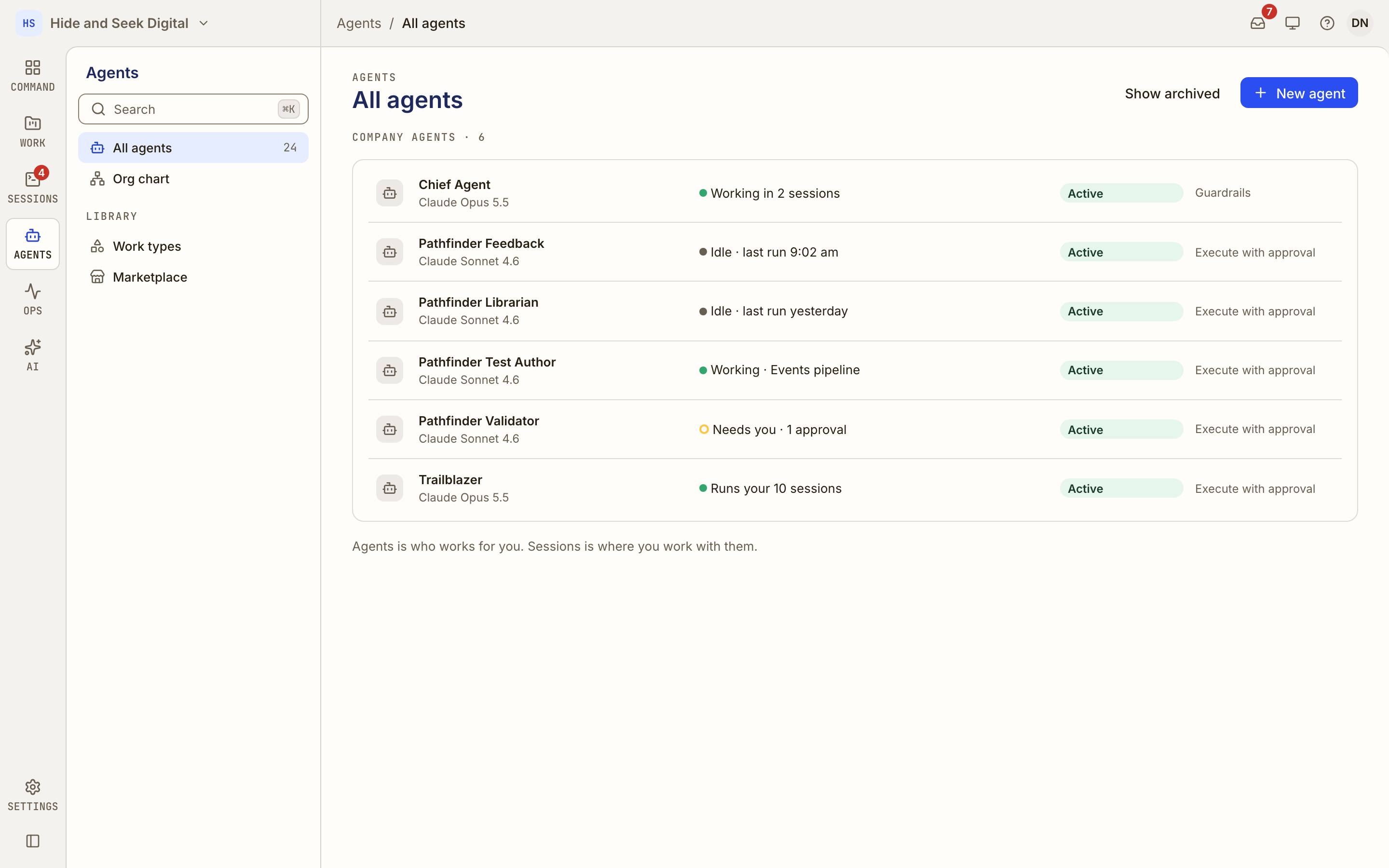
Start with a team that suits the work.
Each team picks a starter set of agents from the library: a Chief plus the roles that fit what that team does. Engineering gets a Tech Lead and a QA Engineer. Growth gets a Copywriter and a Strategist.
Rename them, remove them or add more whenever you like. Each team gets a monthly budget in dollars, and names the person who gets anything the Chief can't sort out.
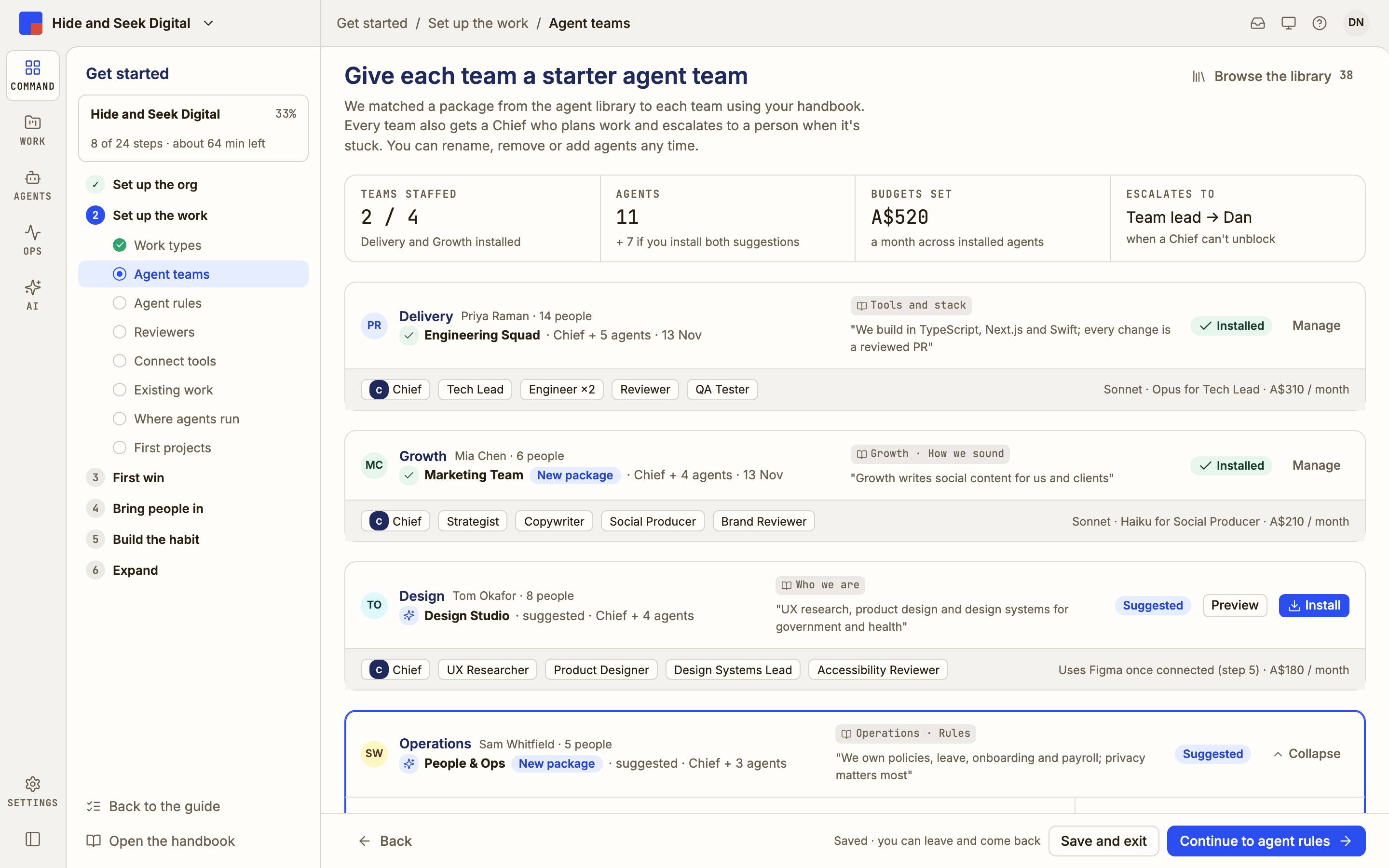
You decide how much rope each agent gets.
Set it per agent. Start careful and loosen it when you trust it. Whatever the level, plans always go to a person, and budgets always apply.
Observe
Reads the work and writes suggestions. Changes nothing. A good place for a new agent to start.
Ask first
Small things like comments and status updates happen on their own. Anything bigger waits for a yes.
Guardrails
Gets on with the work. Finished work and anything it deletes still go to a person to check.
Full autonomy
Works on its own, inside its budget. Every action is still recorded and priced.
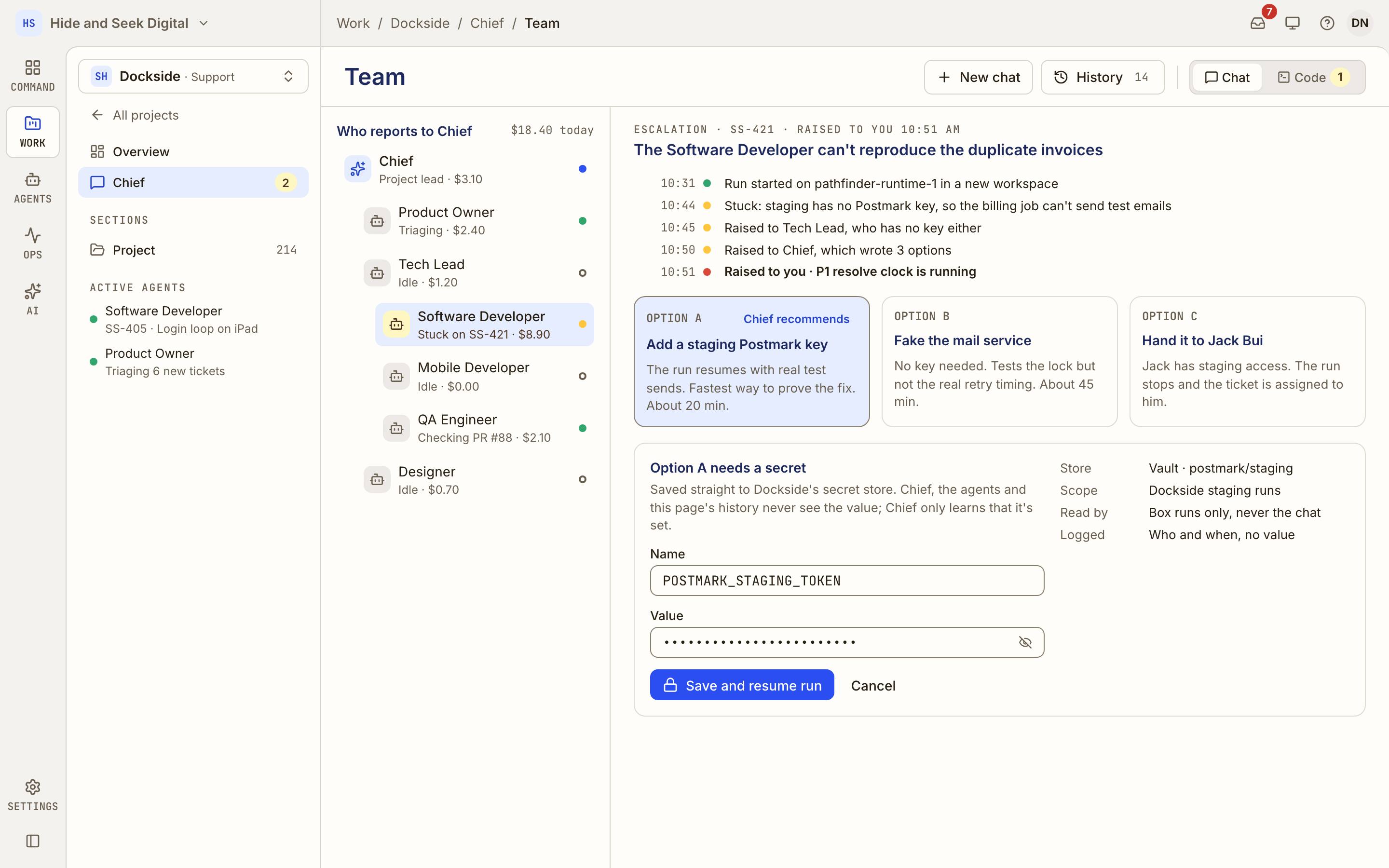
When an agent gets stuck, it asks up the line.
Agents hit walls: a missing password, a test that needs real data, a call above their pay grade. A stuck agent goes to its manager, then to the Chief. If the Chief can't settle it, it comes to you with the options laid out and the one it would pick.
If a run fails twice, it escalates on its own. Nothing sits there quietly broken.
If the answer is a secret, like an API key, you type it into a form that goes straight to the secret store. The Chief only learns that it's been set.
Agents that remember what they learned yesterday.
Ongoing work like a support queue runs in shifts. The agent keeps notes as it goes, so a fresh run doesn't start from scratch and your team can see what it knows.
Three helpers who stay out of the way.
They're not in anyone's reporting line. They watch, help and keep things tidy.
The Chief
Plans the work, staffs it from the library, and asks before it spends money or changes the team. It writes you a short brief every weekday morning.
The Assistant
Answers questions about your organisation from the handbook, with sources. It reads; it doesn't change anything.
The Librarian
Looks after the handbook and the reference library behind the scenes, so the other agents read from something current.

Start with a pilot.
Four weeks. We set it up with you, your team picks a first piece of work, and at the end you have real numbers to decide on.